Seminar Afrofobie Tegengaan 2025 – Een Dag van Dialoog, Leren en Gemeenschap
Combating Afrophobia Seminar 2025 – Strengthening Awareness, Dialogue, and Community
Inhoud/Context:
1. Evenementverslag met advies en video clip/
2. Event Report with advice & video clip
- Evenementverslag: Afrofobie Tegengaan – Inzichten, Acties en Reflecties
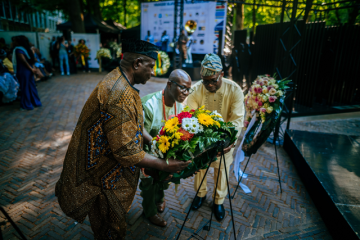
Op 29 november 2025 organiseerde Stichting Africa Life (SAL) haar tweede jaarlijkse seminar gericht op het tegengaan van Afrofobie, racisme en discriminatie. Het evenement vond plaats in Den Haag en werd ondersteund door de NCDR. Het bracht een diverse groep deelnemers samen voor een dag vol leren, reflectie en viering.
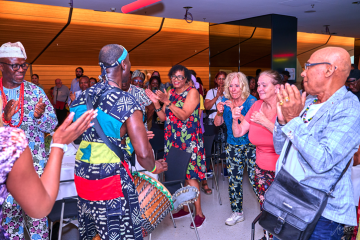
Het programma bood een gevarieerd aanbod aan activiteiten: live muziek, karaoke, interactieve dialogen, een quiz, informatieve brochures en gezamenlijke maaltijden. Dagvoorzitter Vijay Sampatsing begeleidde de dag met warmte en helderheid.
Een van de hoogtepunten was de dialoogsessie met Brahim Fattah (ProDemos), die het concept Wijkcafé Gedeelde Waarden introduceerde. Deelnemers verkenden de betekenis van vrijheid, gelijkwaardigheid en solidariteit in de hedendaagse samenleving en bespraken hoe open gesprekken sociale afstand kunnen verkleinen.
De keynote speech van Ashley Chin (NCDR) ging in op de structurele en alledaagse vormen van Afrofobie in Nederland. Zij benadrukte het belang van bewustwording, educatie en structurele verandering, en deelde concrete aanbevelingen voor individuen, organisaties en beleidsmakers.
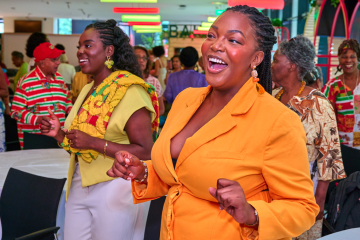
Deelnemers waren de hele dag actief betrokken en deelden ervaringen en inzichten. Het evenement eindigde met een levendige netwerkborrel met DJ-muziek en dans.
De reacties van bezoekers waren overweldigend positief. Zij prezen de gastvrije sfeer, de educatieve waarde en het gevoel van gemeenschap. SAL kijkt ernaar uit om dit belangrijke werk in de komende jaren voort te zetten.
Afrofobie tegengaan begint met één kernidee: het is een combinatie van bewustwording, educatie, actief handelen en structurele verandering. Het vraagt dus iets van individuen, organisaties én de samenleving.
Wat je als individu kunt doen
- Herken en benoem racisme — Afrofobie uit zich vaak subtiel: stereotypering, micro‑agressies, aannames over “cultuur”, of het ontkennen van discriminatie. Het actief herkennen en benoemen ervan doorbreekt normalisering.
- Luister naar ervaringen van Afro‑Nederlanders — Niet om iemand te belasten, maar om te begrijpen hoe racisme werkt in het dagelijks leven.
- Leer over koloniale geschiedenis en hedendaagse ongelijkheid — Kennis maakt het makkelijker om patronen te herkennen en te doorbreken.
- Grijp in bij racisme — Van een opmerking op werk tot discriminatie op straat: steun tonen maakt een groot verschil.
- Reflecteer op eigen vooroordelen — Iedereen heeft impliciete biases; bewustwording helpt om anders te handelen.
Wat scholen, organisaties en instellingen kunnen doen
- Antidiscriminatiebeleid concreet maken — Niet alleen op papier, maar met duidelijke meldprocedures, vertrouwenspersonen en consequenties.
- Trainingen over bias en inclusie — Gericht op herkenning van racisme, inclusief Afrofobie, en op het creëren van veilige omgevingen.
- Diversiteit in besluitvorming — Teams die beslissen over beleid, werving of onderwijs moeten breed vertegenwoordigd zijn.
- Veilige meldcultuur — Mensen moeten zonder angst voor repercussies racisme kunnen melden.
- Representatie verbeteren — In lesmateriaal, media-uitingen, personeelsbestand en leiderschap.
Wat op maatschappelijk en politiek niveau nodig is
- Strengere handhaving van antidiscriminatiewetgeving — Bijvoorbeeld bij arbeidsdiscriminatie, woningmarkt en politiepraktijken.
- Onderzoek en data — Zonder cijfers over discriminatie, etnisch profileren of ongelijkheid blijft het moeilijk om gericht beleid te maken.
- Onderwijs over koloniale geschiedenis en racisme — Structureel en verplicht, niet alleen thematisch.
- Steun aan Afro‑Nederlandse organisaties — Zij doen belangrijk werk in belangenbehartiging, educatie en community‑building.
- Media‑verantwoordelijkheid — Minder stereotypering, meer nuance en meer ruimte voor Afro‑Nederlandse stemmen.
Minder voor de hand liggende maar cruciale factoren
- Taalgebruik heeft impact — Woorden als “exotisch”, “niet‑Nederlands”, of “moeilijk haar” lijken klein, maar bevestigen hiërarchieën.
- Racisme is niet alleen individueel, maar ook structureel — Het gaat niet alleen om intenties, maar om systemen die ongelijkheid in stand houden.
- Bondgenootschap is actief — Niet alleen “niet racistisch zijn”, maar antiracistisch handelen: corrigeren, ondersteunen, ruimte maken, en soms privileges inzetten.
Wat je vandaag al kunt doen
- Iemand aanspreken op een stereotype grap.
- Een boek, podcast of documentaire over Afro‑Nederlandse geschiedenis of ervaringen kiezen.
- Een gesprek starten op werk over inclusie.
- Een lokale antidiscriminatie voorziening of community‑organisatie steunen.
Wat zou voor jou de belangrijkste plek zijn om te beginnen: in je eigen omgeving, op werk/school, of juist in bredere maatschappelijke verandering? Deze is de vraag!
Het was een geslaagde missie en dag!
Onze dank gaat uit naar NCDR, die deze dag financieel mogelijk heeft gemaakt.
Contact & Informatie E-mail: africalifestichting@gmail.com.
Stichting Africa Life in samenwerking met het Bureau Nationaal Coördinator
tegen Discriminatie en Racisme.
REPORT NO ROOM FOR RACISM,
DISCRIMINATION & AFROPHOBIA
(EVERYONE MATTERS)

Combating Afrophobia Seminar 2025 – Strengthening Awareness, Dialogue, and Community
2. Event Report: Countering Afrophobia – Insights, Actions and Reflections
On 29 November 2025, Stichting Africa Life (SAL) hosted its annual seminar dedicated to combating Afrophobia, racism, and discrimination. Supported by the National Coordinator against Discrimination and Racism (NCDR), the event took place in The Hague and welcomed participants from across the Netherlands.
The seminar offered a full day of activities, including live music, karaoke, dialogue sessions, a quiz, informational materials, and shared meals. The event was free and open to all, with a special focus on people of African descent.
A central part of the program was the dialogue with Brahim Fattah (ProDemos) on shared values in Dutch society. Participants explored themes such as freedom, equality, and solidarity, and discussed how meaningful conversations can help bridge divides.
Keynote speaker Ashley Chin (NCDR) addressed the ongoing impact of Afrophobia in the Netherlands and presented insights and recommendations for combating discrimination at individual, organizational, and societal levels.
The day concluded with networking, music, and dancing, creating a sense of connection and celebration.
The reactions from visitors were overwhelmingly positive. They praised the welcoming atmosphere, the educational value, and the strong sense of community. SAL looks forward to continuing this important work in the years to come.
SAL thanks NCDR for making this event possible and remains committed to promoting awareness, inclusion, and equal opportunities for all. Africa Life Foundation in collaboration with the office of the National Coordinator against Discrimination and Racism.
Countering Afrophobia starts with one core idea: it is a combination of awareness, education, active intervention, and structural change. It therefore requires action from individuals, organizations, and society as a whole.
What you can do as an individual
- Recognize and name racism — Afrophobia often appears subtly: stereotyping, microaggressions, assumptions about “culture,” or denying discrimination. Actively recognizing and naming it breaks the cycle of normalization.
- Listen to the experiences of Afro-Dutch people — Not to burden anyone, but to understand how racism operates in daily life.
- Learn about colonial history and present-day inequality — Knowledge makes it easier to identify and break harmful patterns.
- Intervene when you witness racism — Whether it’s a comment at work or discrimination in public: showing support makes a real difference.
- Reflect on your own biases — Everyone has implicit biases; becoming aware of them helps you act differently.
What schools, organizations, and institutions can do
- Make anti-discrimination policies concrete — Not just on paper, but with clear reporting procedures, trusted contact persons, and real consequences.
- Provide training on bias and inclusion — Focused on recognizing racism, including Afrophobia, and creating safe environments.
- Ensure diversity in decision-making — Teams responsible for policy, hiring, or education should be broadly representative.
- Create a safe reporting culture — People must be able to report racism without fear of repercussions.
- Improve representation — In teaching materials, media communications, staffing, and leadership.
What is needed at the societal and political level
- Stricter enforcement of anti-discrimination laws — For example in employment, housing, and policing practices.
- Research and data collection — Without data on discrimination, ethnic profiling, or inequality, it is difficult to create targeted policies.
- Education on colonial history and racism — Structural and mandatory, not just thematic.
- Support for Afro-Dutch organizations — They play an important role in advocacy, education, and community building.
- Media responsibility — Less stereotyping, more nuance, and more space for Afro-Dutch voices.
Less obvious but crucial factors
- Language matters — Words like “exotic,” “not really Dutch,” or “difficult hair” may seem small, but they reinforce hierarchies.
- Racism is not only individual but also structural — It’s not just about intentions, but about systems that maintain inequality.
- Allyship is active — Not just “not being racist,” but acting anti-racist: correcting, supporting, creating space, and sometimes using your privileges.
What you can do today
- Address someone about a stereotypical joke.
- Choose a book, podcast, or documentary about Afro-Dutch history or experiences.
- Start a conversation at work about inclusion.
- Support a local anti-discrimination service or community organization.
What would be the most important place for you to start: in your own environment, at work/school, or in broader societal change?
It was a successful mission and a great day!
Our thanks go to NCDR, who made this day financially possible.
SAL thanks NCDR for making this event possible and remains committed to promoting awareness, inclusion, and equal opportunities for all.